
History as an Engineered Record
Operation NapoleonThis thread traces how wartime contingency, intelligence secrecy, and official misinformation turn competing accounts of the past into tools of power, while leaving the underlying truth unsettled.
increasing Bearing strength in each event
 decreasing
Bearing strength in each eventdecreasingA Plan in Wartime
A Contingency Becomes a Secret
The proposed bargain
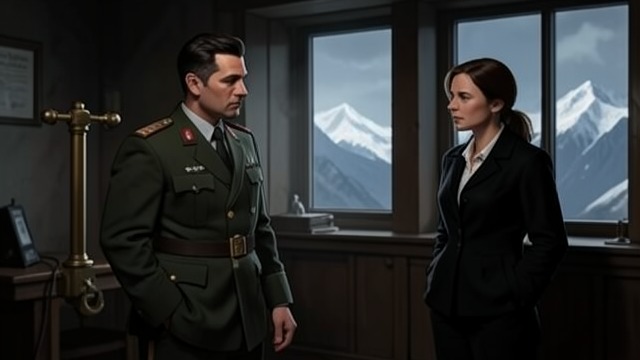
As the war nears its end, Allied and German representatives explore possibilities that would have seemed unthinkable in public: an arrangement against the Soviet advance. The papers later found in the wreckage connect this atmosphere of contingency to Operation Unthinkable and to Operation Napoleon, though neither the scheme nor its ultimate purpose is fully established by the people who carried it out.
History as a present danger
The proposal matters not only for what it might have done, but for the fact that its existence could disrupt the accepted account of the war. The prospect of cooperation with Nazi officials carries an enormous moral and political cost. Decades later, the fear of that cost will help motivate a recovery operation intended to remove not just an aircraft, but the evidence that might complicate public memory.
The Crash Interrupts the Plan
An Archive Lost in Ice
A flight disappears
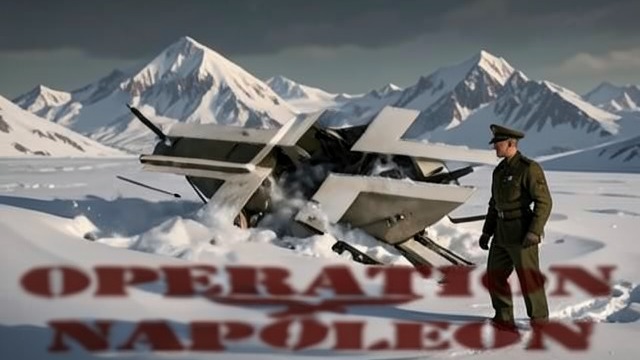
William Miller pilots a German Junkers Ju 52 painted in Allied colors, carrying German officials, an American general, provisions, and two crates of gold. The plane crashes on Vatnajökull as it approaches Iceland in a blizzard, interrupting a mission whose political purpose remains unclear even to some of its participants.
The missing evidence
The aircraft and its passengers vanish beneath the glacier, while the absent Count von Mantauffel leaves the fate of one participant uncertain. The crash turns a fragile and possibly incomplete plan into a material secret: bodies, documents, and a flight diary are sealed away together. The ice delays discovery long enough for the operation to become both history and something its surviving custodians can still try to control.
Official Stories Multiply
A Search Hidden in Plain Sight
Surveillance without explanation
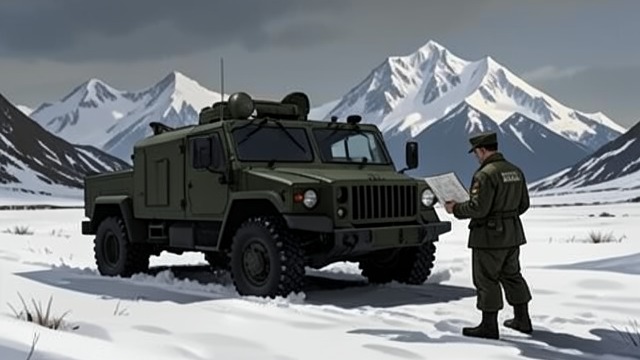
Military intelligence monitors the glacier and mounts another search in 1967, but keeps its real purpose from Icelandic observers. Armstrong and other astronauts train in Iceland, an event that supplies a publicly appealing explanation for unusual military activity and helps divert attention from the search.
Rumor fills the gap
With no official account of what the army is looking for, pilots and locals circulate possibilities: gold, a bomb, a dangerous weapon, or another secret cargo. These explanations are not reliable discoveries; they are competing stories shaped by fragments of knowledge and deliberate concealment. The gap between what people see and what authorities say becomes part of the machinery that protects the original secret.
Misinformation as Policy

The Present Rewrites the Past
A usable explanation
When the aircraft re-emerges, Vytautas Carr tells U.S. officials that it contains stolen Nazi gold, including gold taken from concentration-camp victims. The account secures approval for a covert recovery by presenting a politically explosive but familiar scandal. Yet the recovered cargo does not match the scale of the story, and Carr’s explanation has itself served as misdirection.
Contradiction as protection
On Vatnajökull, officials and military representatives offer Icelandic leaders shifting accounts: a scientific expedition, military exercises, an old crash, a dangerous bomb. Afterward, different media reports repeat different explanations, making it difficult to establish a stable public account. In this contest, misinformation does more than hide evidence; it teaches observers to doubt every version, including the one that might be true.
A Truth Without Public Proof
The Secret Outlives Its Witnesses
Evidence without recognition
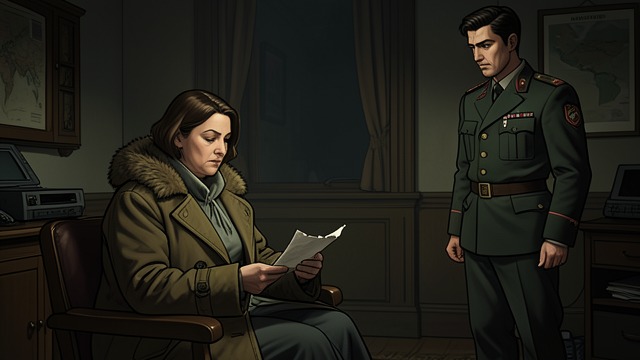
Kristín and the surviving rescuers tell what they saw, but official denials, inconsistent explanations, and weak prospects for prosecution prevent their account from becoming settled public knowledge. The American military denies knowledge of the aircraft, while the Icelandic government accepts an account of authorized exercises. What Kristín learns about the plane’s contents rests partly on a conversation with Robert Miller and on damaged papers, not on evidence that she can safely present in public.
A private burden
Kristín chooses not to disclose the full secret, fearing the consequences for herself and those close to her. The decision leaves the distinction between truth and proof unresolved: she knows more than she can establish, while powerful institutions can make the absence of public confirmation look like evidence of fabrication. The secret survives not because it is entirely unknown, but because those who might expose it cannot safely make it believable.
The closing months of World War II
Early 1945, during the storm over Iceland
The 1967 expedition and its public cover
January 2000, during the recovery operation
The months after Kristín returns to Reykjavík
